Phenome India - CSIR Health Cohort Knowledgebase (PI-CHeCK)

A unique health program for the CSIR family

Phenome India – CSIR Health Cohort Knowledgebase (PI‑CHeCK) is a flagship initiative to build a long‑term cohort of CSIR employees, pensioners and spouses, and uncover India‑specific risk factors for non‑communicable cardio‑metabolic diseases.

CSIR Flagship Programme
Prospective Longitudinal Design
Precision Medicine
Participatory Approach

Explore PI‑CHeCK Features

Click on any feature badge above to see how it contributes to the Phenome India – CSIR Health Cohort experience.

37+
CSIR Labs & Centres
Long-term
Study Type
Cardio-metabolic
Primary Focus
2023
Launch Year

About Phenome India

Phenome India – CSIR Health Cohort builds a deeply characterised cohort of CSIR employees, pensioners and spouses to generate India‑specific evidence on cardio‑metabolic health and related conditions.
Cohort Portal
Explore the live cohort portal

About the Initiative

  • CSIR-wide initiative to map health patterns in a diverse Indian workforce.
  • Operates through the PI‑CHeCK Knowledgebase for structured data collection.
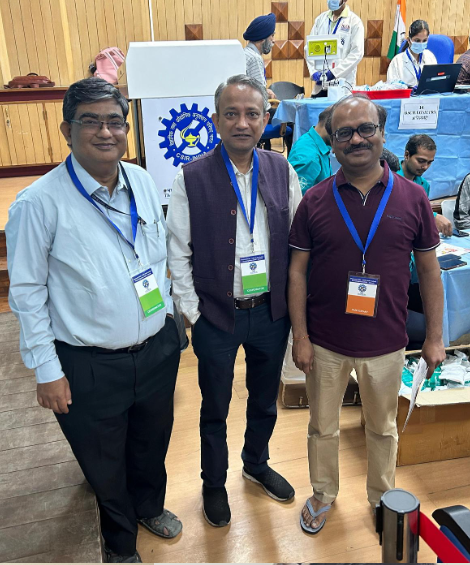
  • Health camps organised across multiple CSIR laboratories and centres.
  • Emphasis on long-term cohort development and periodic follow‑up visits.

Key Study Focus

  • Identification of India‑specific risk factors for cardio‑metabolic disease.
  • Joint analysis of lifestyle, environment, genetics and clinical history.
  • Quantification of body composition, anthropometry and vital signs.
  • Integration of biochemical, imaging and molecular assay data.

Multi-layer Data

  • Baseline and follow‑up clinical examination with structured questionnaires.
  • Detailed lifestyle information including diet, physical activity and sleep.
  • Biochemistry, imaging and omics‑level markers for deeper phenotyping.
  • Digital infrastructure to store, curate and analyse cohort information.

National Importance

  • Aligns with the vision of "Swasthya Bharat, Viksit Bharat".
  • Promotes preventive and participatory healthcare among CSIR staff.
  • Supports development of Indian reference standards and risk scores.
  • Creates a resource for research, policy planning and capacity building.
PI CHeCK map

Objectives

The PI‑CHeCK cohort is designed with clearly defined objectives that connect individual participant assessments to national‑level health priorities. Click on each objective to see more details.

01 Identify India-Specific Health Risk Factors

  • Characterise risk factors for cardio‑metabolic diseases in Indian populations.
  • Study the interaction between genetics, lifestyle and environmental exposures.
  • Improve prediction of disease onset, severity and long‑term outcomes.

02 Build a Rich Multi Modal Dataset

  • Collect clinical history, medication use and symptom profiles in a standardised form.
  • Capture anthropometry, body composition, vital signs and functional measurements.
  • Integrate biochemistry, imaging and omics to enable deep phenotyping.

03 Enable Precision Medicine

  • Develop India‑specific health profiles to support personalised care strategies.
  • Facilitate early diagnosis and targeted interventions in high‑risk individuals.
  • Support AI/ML‑based models for risk prediction and treatment optimisation.

04 Support Public Health and Policy

  • Generate evidence to guide national guidelines and screening strategies.
  • Improve awareness of non‑communicable diseases among CSIR communities.
  • Contribute to long‑term planning for healthier workplaces and cities.

05 Promote Holistic Health

  • Conduct health camps that bring screening and counselling closer to participants.
  • Emphasise lifestyle modification, risk reduction and preventive care.
  • Offer structured follow‑up for monitoring and longitudinal care pathways.

06 Discover Diagnostic & Prognostic Biomarkers

  • Identify biomarkers that signal early disease or pre‑disease states.
  • Relate molecular signatures to clinical trajectories and complications.
  • Strengthen national capability in translational and precision medicine research.

Methodology

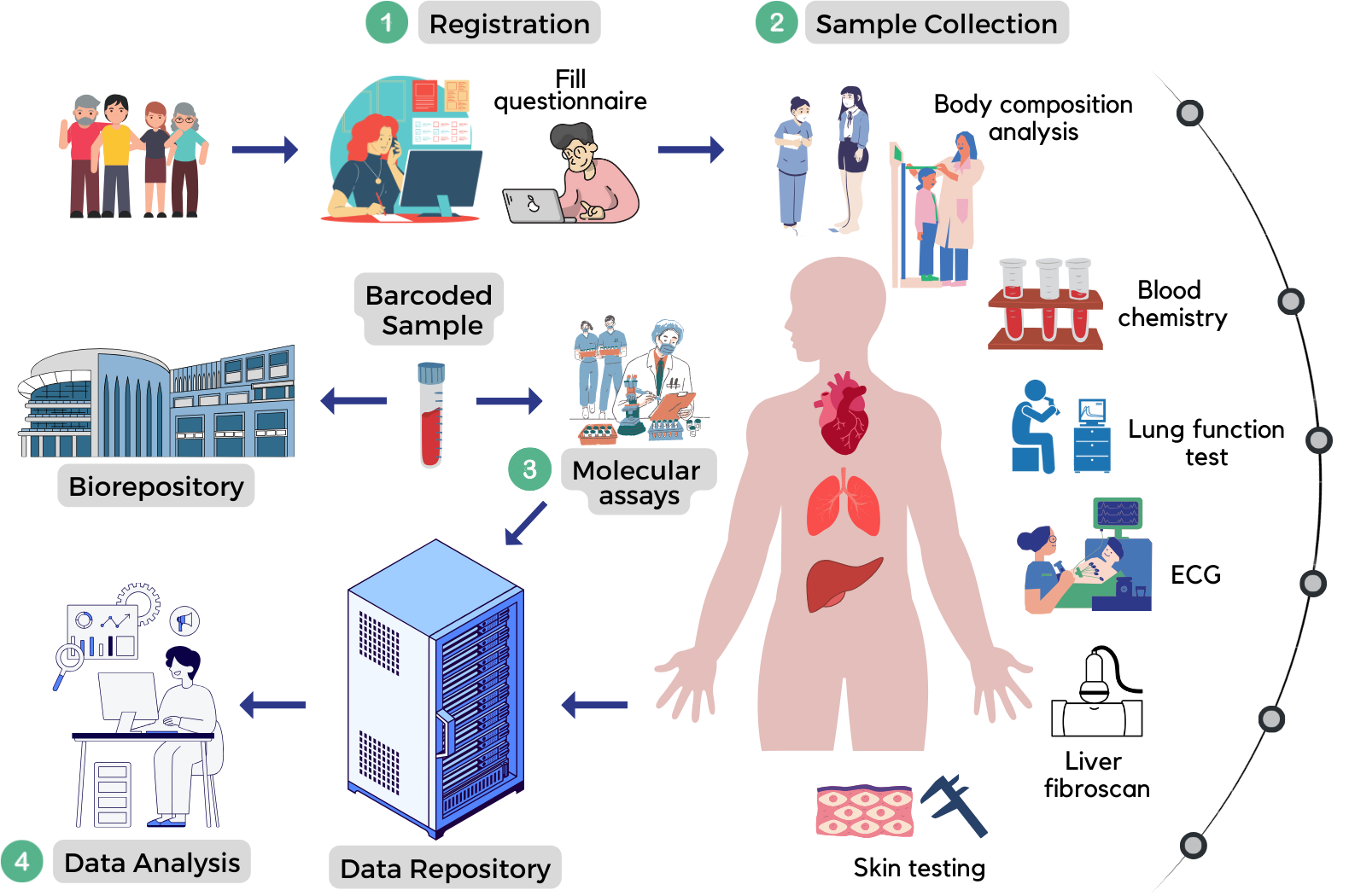
To achieve the study objectives, PI‑CHeCK uses standardised methodologies, calibrated devices and harmonised protocols during each participant visit.

01 Anthropometry

  • Body composition is assessed using a Body Composition Analyzer based on bioelectrical impedance.
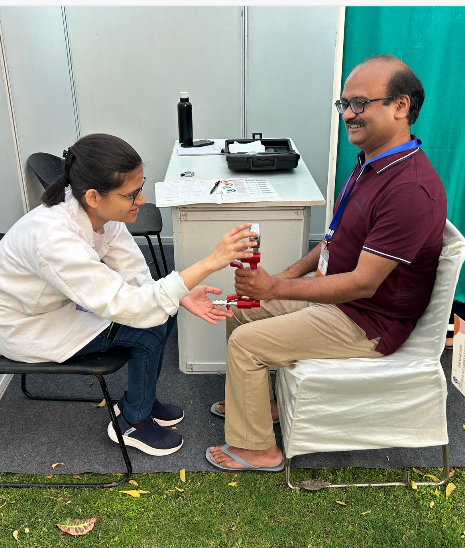
  • Hand grip strength is measured with a dynamometer at multiple handle widths to capture peak force.
  • Circumference and height measurements (chest, waist, abdomen) are recorded for risk evaluation.

02 Phlebotomy

  • Venous blood is drawn using standard phlebotomy procedures under aseptic conditions.
  • Samples are collected for biochemistry, haematology and molecular assays as per protocol.
  • Pre‑analytical handling procedures are followed to preserve sample integrity and safety.

03 FibroScan

  • Vibration‑controlled transient elastography is used to estimate liver stiffness non‑invasively.
  • A dedicated probe sends mechanical pulses while ultrasound tracks the resulting shear wave.
  • Liver stiffness (kPa) and Controlled Attenuation Parameter (CAP) values are used to assess fibrosis and steatosis.

04 ECG

  • Standard 12‑lead electrocardiography records the electrical activity of the heart over a defined interval.
  • The tracing reflects depolarisation and repolarisation of cardiac muscle cells in different regions.
  • ECG patterns are used to screen for rhythm disturbances, ischaemia and conduction abnormalities when indicated.

05 Oscillometry

  • Respiratory oscillometry measures airway resistance and reactance using pressure oscillations during tidal breathing.
  • The technique is sensitive to small airway dysfunction and distal airway changes that may be missed on routine tests.
  • Outputs are reported across different frequencies (Hz) to characterise mechanical properties of the respiratory system.

06 Spirometry

  • Spirometry records maximal inhaled and exhaled volumes with forced effort following standard manoeuvres.
  • Flows or volumes are plotted as functions of time and/or volume, generating reproducible curves.
  • Parameters such as FEV1, FVC and their ratios help classify ventilatory patterns and lung function status.

07 Skin Health Analysis

  • Non‑invasive probes measure trans‑epidermal water loss to assess barrier function of the skin.
  • Additional sensors quantify stratum corneum hydration, elasticity and biomechanical properties.
  • Sebum measurements provide complementary information relevant to surface oiliness and skin type.

Participating Institutes

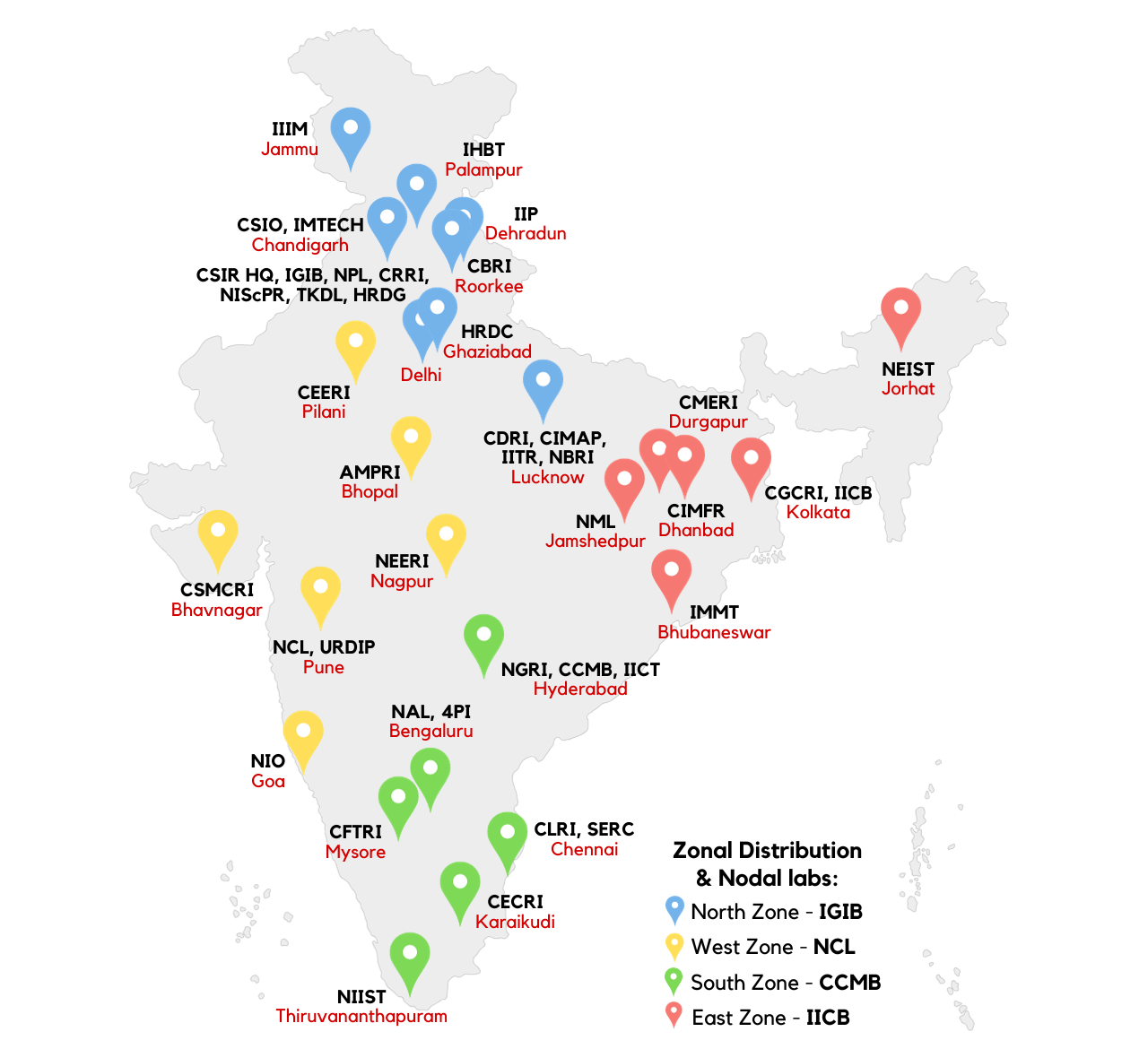
A wide network of CSIR laboratories and centres across India contributes to PI‑CHeCK, ensuring geographical diversity and broad scientific expertise.
Participating institutes map

What the Study Measures

PI‑CHeCK integrates multiple data layers to build a holistic picture of each participant's health trajectory across time.

📋

Clinical & Questionnaires

Standardised questionnaires capture medical history, current diagnoses, medication use and symptom profiles.

Demographics Medical history Family history
🏃

Lifestyle & Behaviour

Validated tools record dietary patterns, physical activity, tobacco and alcohol use, sleep and daily routines.

Diet patterns Physical activity Sleep & habits
⚖️

Body Composition

Height, weight, circumferences, bioimpedance and vital signs are measured using calibrated devices at camps.

Height & weight Body fat Blood pressure
🔬

Scans

Scans are used where feasible for deeper phenotyping.

Specialised scans
🧪

Biochemistry

Blood‑based panels track cardio‑metabolic risk markers, organ function parameters and other systemic indicators.

Glucose Lipids Liver & kidney
🧬

Molecular Assays

Genomic and other molecular assays link genetic variation and molecular signatures with clinical outcomes.

Genomics Molecular markers

Contact Us

For questions about Phenome India, PI‑CHeCK or cohort‑related activities, please contact the core coordination team.

📧 Email

csircohort@csir.res.in